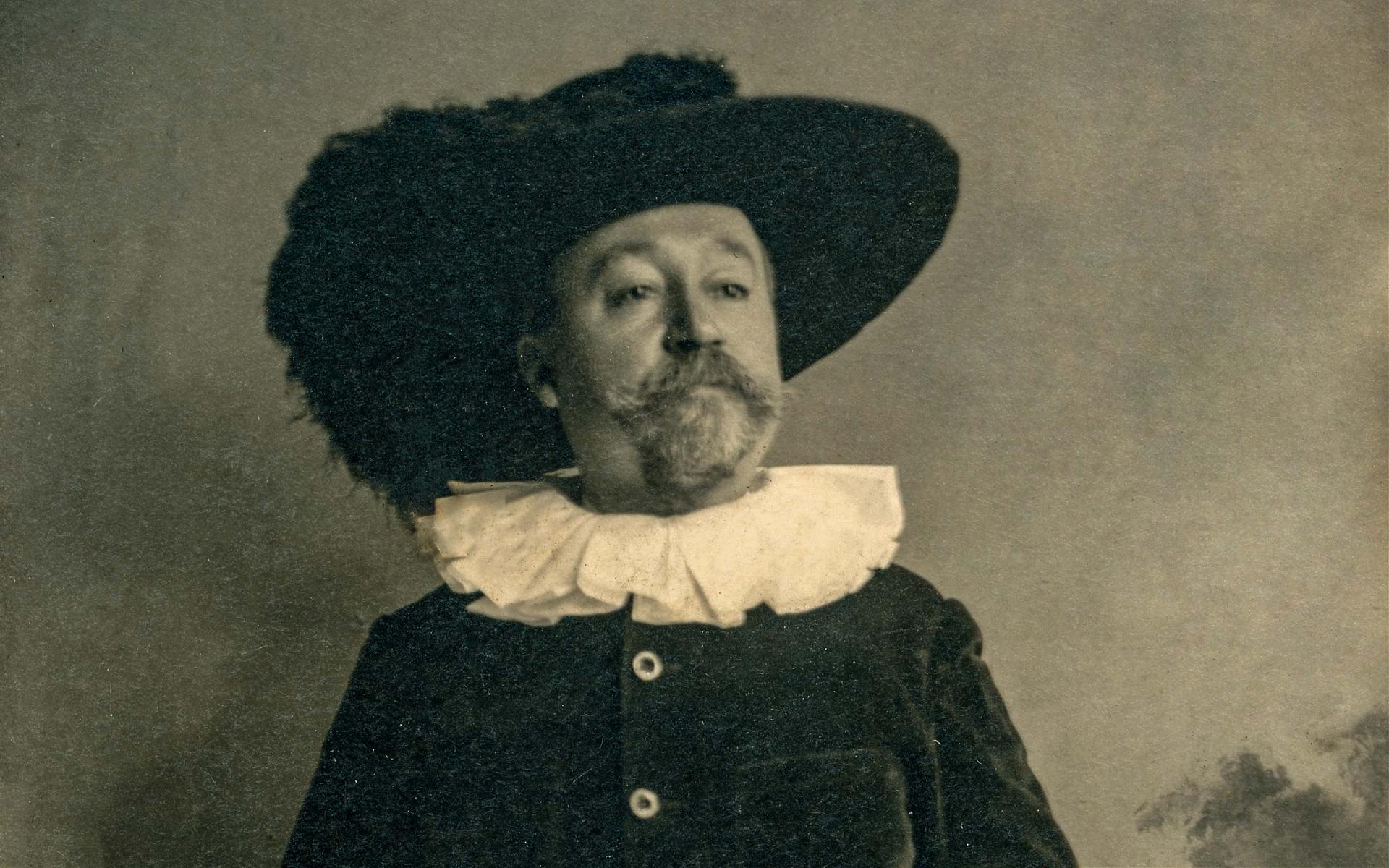
Rotterdam • February 6, 1851 – September 1, 1923 • Yokohama
While De Graeff van Polsbroek was the father of modern Dutch diplomatic representation in Japan, Léon van de Polder was the legation’s soul.
From 1876 through the early 1920s, he served as an interpreter, chancellor, secretary, and finally as councillor, which would be rendered as counselor in modern American English. In between—to bridge the gaps between old and new representatives—he functioned as chargé d’affaires an astounding twenty times. No other Dutch diplomat has served in Japan as long as Van de Polder; he personified the legation.
Van de Polder’s career developed as Japan became a modern nation. He arrived at Yokohama in 1865. It was only six years after the port opened to international trade, just a year before the town burned down in a devastating fire, and three years before the Meiji Restoration.
After studying Japanese at the Foreign Language School at Yokohama, he worked as a translator at the French Legation during a time when it had a remarkable influence on Japanese affairs. Consul General Léon Roches (1809–1901), for example, was instrumental in the construction of the Yokosuka Naval Arsenal, now a port under the control of the United States Fleet.
Van de Polder left the French legation to work as an interpreter at the Foreign Mixed Court at Kobe for several years before starting as translator-secretary with the Dutch legation in 1876. He worked under one of the most influential diplomats in Asia at the time, British representative Sir Harry Parkes (1828–1885), who looked after Dutch interests for a brief period.
He also performed duties for Sweden, Norway and Denmark, whose interests were looked after by the Dutch legation. His work brought him an astounding sixteen decorations from seven countries.
As an author, Van de Polder wrote about Japanese statesman Iwakura Tomomi (1825–1883), Japanese peerage, bamboo culture, Japanese agriculture, and old coins. The Japan Chronicle described his Japanese coin collection as “very remarkable.”
Gregarious and outgoing, he was the very first person to receive an honorary membership of the Tokyo Club, a British-style gentlemen’s Club established in 1884 by Minister of Foreign Affairs Inoue Kaoru (1836–1915). The club is still active today.
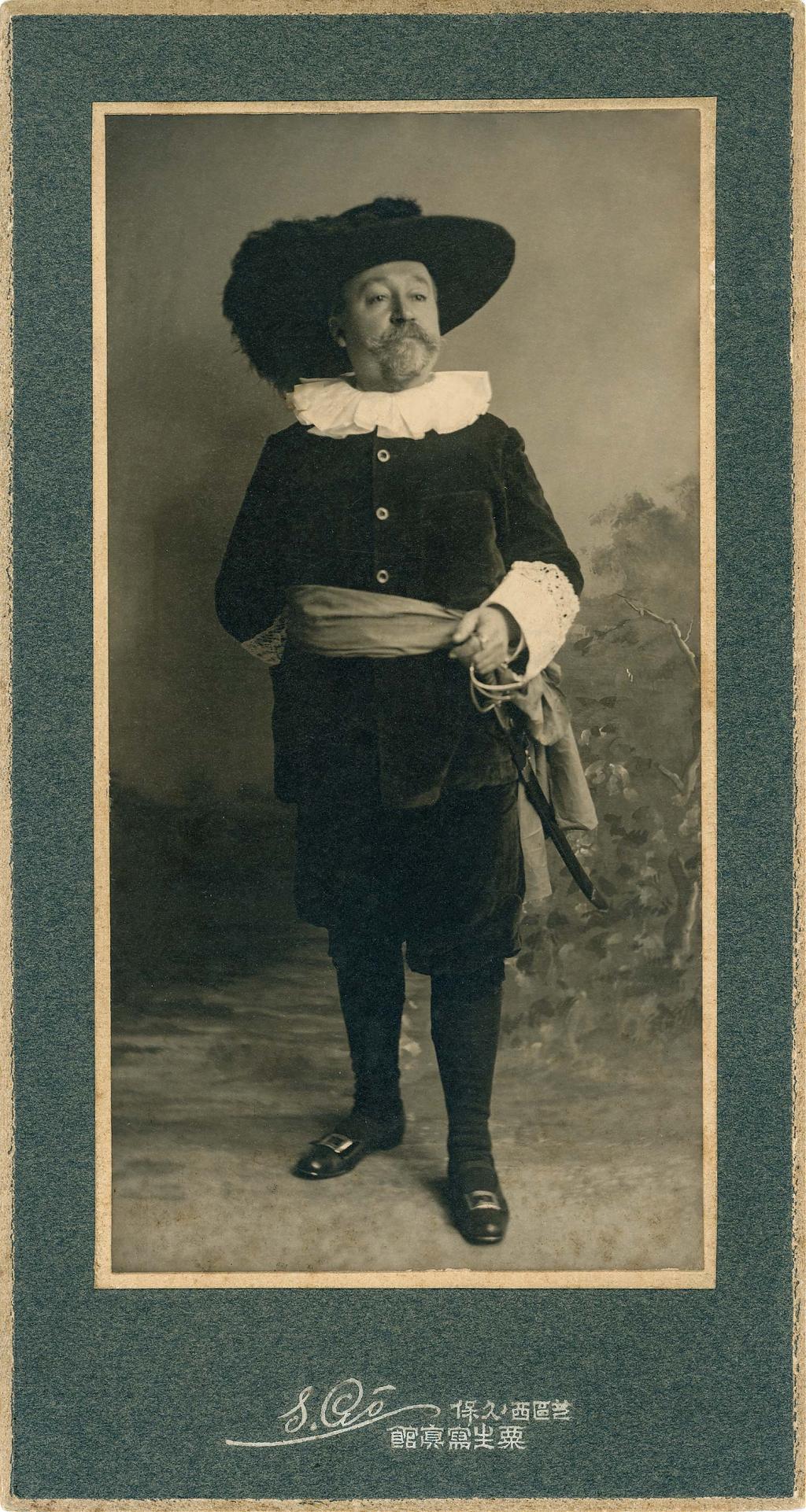
This photograph (Fig. 50) seems to encapsulate the kind of person he was. He dressed up as Dutch burgher for a dance at the German Embassy. Van de Polder gifted the photo to the attaché of the Austrian-Hungarian legation, who also attended, and left a personal message on the back.
Only a year after he and his wife moved to Yokohama’s elegant Yamate area, they were killed in the 1923 earthquake that left the city in ruins. Van de Polder was working on his autobiography at the time. He said it might offer a clearer view on the events described in Sir Ernest Satow’s A Diplomat in Japan.
We will never know. All his papers were lost in the disaster. If they had not been, his name would certainly be known today. Now, just a few errant traces remain.
Next: 4. Jean Charles Pabst
Main Sources
- Japan Chronicle, March 13, 1924.
- Japan Directory 1878–1918.
- Who’s Who in Japan, 1919.
Publications
- La Pairie Japonaise. Yokohama: S. Salabelle, 1885.
- Biographie de son Excellence Iwakoura. Yokohama: S. Salabelle, 1885.
- Abridged history of the copper coins of Japan. Transactions of the Asiatic Society of Japan 19 (pp. 419-500), 1891.
- De cultuur der Bamboe in Japan. Haarlem: Koloniaal Museum, 1894.
Published
Updated
Reference for Citations
Duits, Kjeld (). 3. Léon van de Polder, From Dejima to Tokyo. Retrieved on September 17, 2026 (GMT) from https://www.dejima-tokyo.com/articles/40/leon-van-de-polder


There are currently no comments on this article.